
Pre-School (KG1, KG2, KG3)
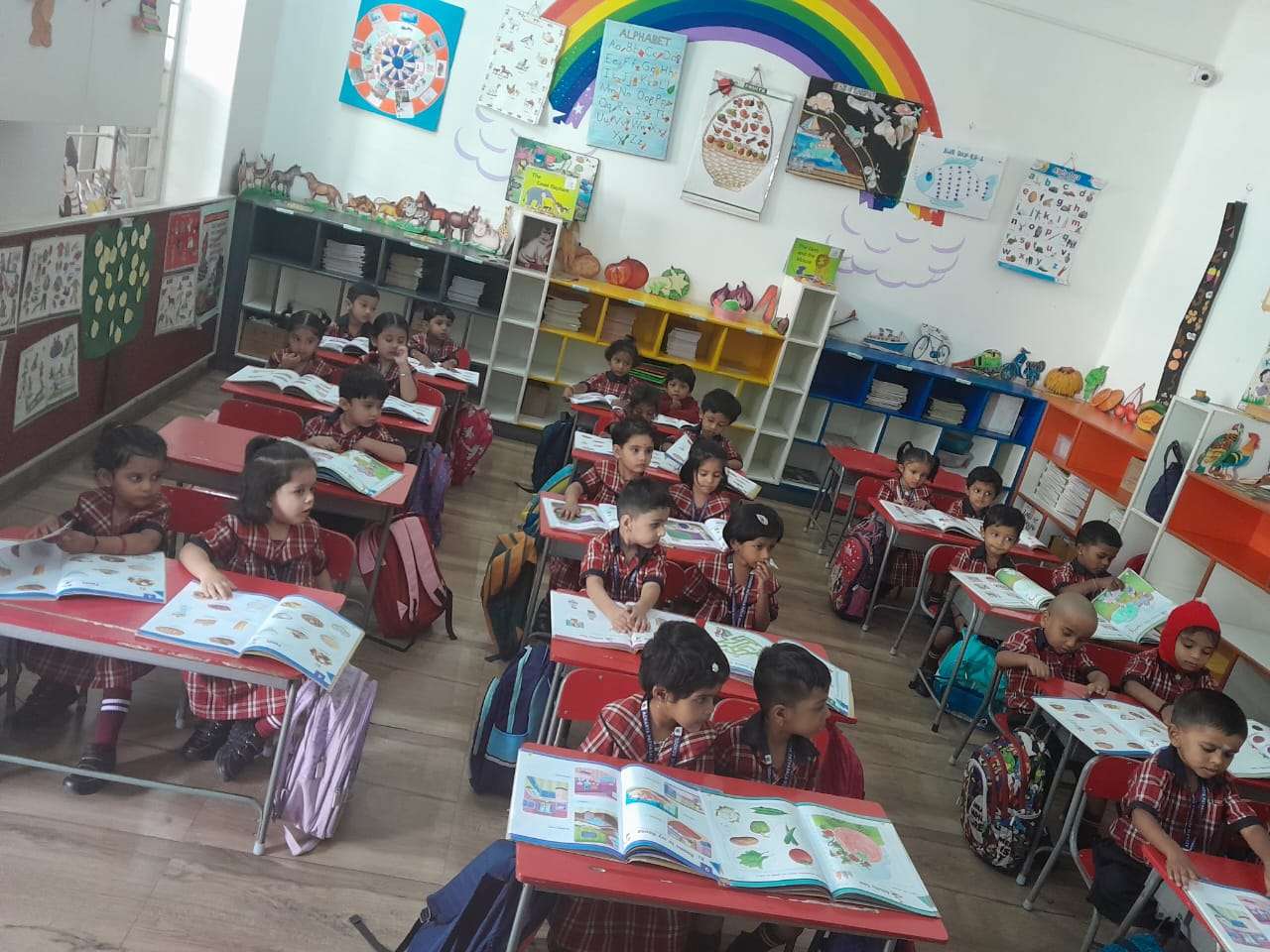
The focus is on developing cognitive, affective, and psychomotor abilities.
The learning in the Nursery Classes is based primarily on play-based activities in a warm, welcoming, and cheerful atmosphere. Teaching methodologies ideally consist of flexible, multi-faceted, multi-level, play-based, activity-based, and inquiry-based learning, comprising of alphabets, languages, numbers, counting, colors, shapes, indoor and outdoor play, puzzles and logical thinking, problem-solving, drawing, painting and other visual art, craft, drama and puppetry, music and movement. The secure and happy environment is conducive for developing social capacities, sensitivity, good behavior, courtesy, ethics, personal and public cleanliness, teamwork, and cooperation.
The caring and friendly staff, the bright classrooms, the right blend of traditional and Montessori curriculum are all ideal for attaining optimal outcomes in the domains of physical and motor development, cognitive development, socio-emotional-ethical development, cultural/artistic development, and the development of communication and early language, literacy, and numeracy by the time the children complete three years in Pre-school.
Grade 1-5 (Primary)
The focus is on building a strong foundation in core academics, developing essential life skills, and fostering holistic growth through experiential learning.
With a strong foundation of the pre-primary education, the children enthusiastically step into the primary school. They are geared up for independent learning and logical thinking with the advantage of a holistic curriculum that caters to the development of multiple intelligences in all children.
The curriculum is designed to be student-centric and activity-based, making education a joyful process of discovery rather than mere instruction. We focus on enhancing literacy, numeracy, and environmental awareness through creative teaching methodologies, including projects, discussions, and educational field trips. Students are encouraged to develop essential life skills, like effective communication, collaboration, and problem-solving, which are crucial for their overall personality development. A balanced emphasis is placed on academics, sports, and co-curricular activities to ensure a truly holistic and well-rounded educational experience at this formative stage.
Grade 6-8 (Middle School)
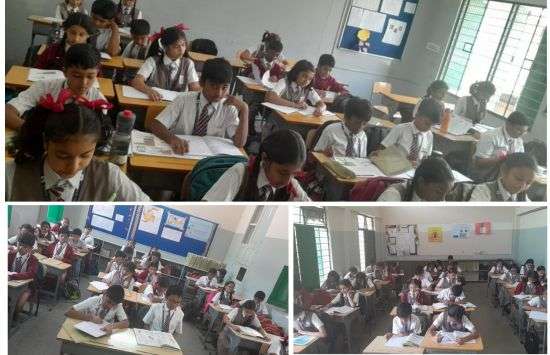
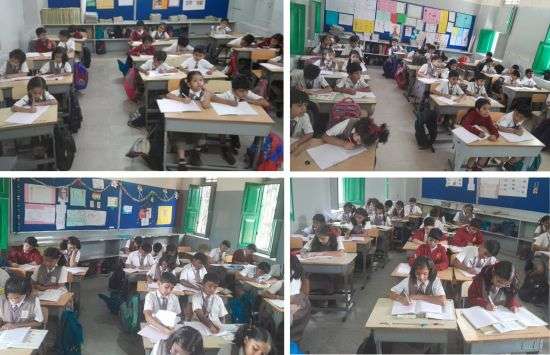
The focus is on developing critical thinking, promoting in-depth conceptual understanding across subjects, and facilitating a smooth transition to the demanding secondary curriculum.
The focus at middle school shifts to experiential, holistic, integrated, discovery-oriented, learner-centered, discussion-based, flexible, and of course, enjoyable modes of learning to reduce the burden of increasing content and concepts. How to think critically and solve problems, how to be creative and multi-disciplinary, and how to innovate, adapt, and absorb new material in novel and changing fields are the challenges they get geared up for.
The curriculum includes basic arts, crafts, humanities, games, sports and fitness, languages, literature, culture, and values, in addition to science and mathematics, to develop all aspects of learners’ brains and make education more well-rounded, useful, and fulfilling to the learner.
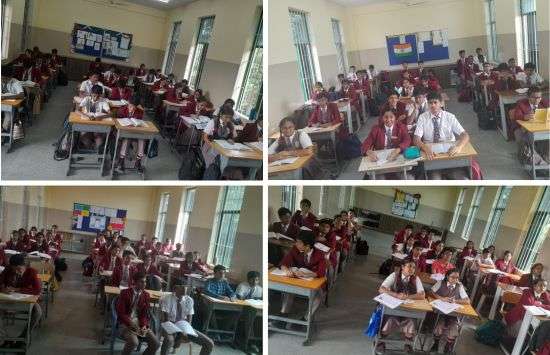
Grade 9-10 (High School)
The focus is on achieving academic excellence in preparation for the ICSE Board Examination, while encouraging specialized subject interest and building strong study habits for future academic and career paths.
The students step into the high school with a strong foundation and the pillars of a holistic curriculum. They are equipped with the required “Soft skills”. The emphasis now is on the development of the creative potential of each individual, in all its richness and complexity. Cultural awareness and empathy, perseverance and grit, teamwork, leadership, communication, among others help build character; enabling learners to be ethical, rational, compassionate, and caring, while at the same time preparing them for gainful, fulfilling employment.
This stage culminates in the rigorous ICSE Board Examination, requiring focused dedication to academic depth and subject mastery. The curriculum facilitates specialized learning paths, allowing students to select subjects that align with their future educational and career aspirations, setting the stage for success in higher education.